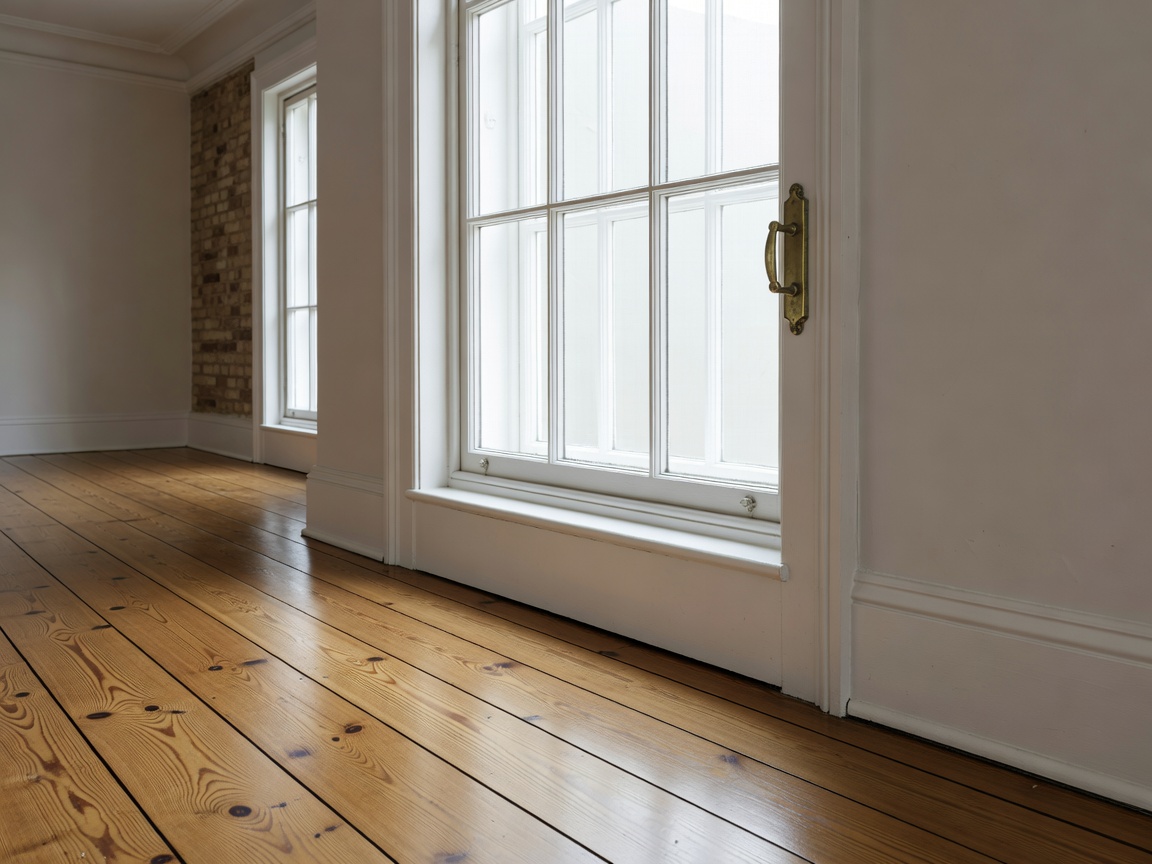
Historic apartments respond to use. Dust gathers on mouldings, moisture changes with cooking and bathing, timber moves with seasons, and hardware receives repeated force. A short routine protects character without turning daily life into a conservation project.
Ventilation and humidity awareness
Ventilate kitchens and bathrooms during moisture-producing activities and observe how the apartment responds. Condensation, musty smells, mould, blistering paint, or recurring damp marks deserve attention. Do not simply repaint. Find the source and use qualified advice where building fabric or services may be involved.
Timber floors and finishes
Remove abrasive grit at entrances. Use a suitable dry or lightly damp method for the finish. Avoid excess water and unverified chemicals. Felt pads reduce scratching. Rugs can protect routes but may hide moisture or interrupt underfloor systems. Follow the finish manufacturer’s care guidance when available.
Windows, doors, and hardware
Keep window and door movements gentle. Check that catches, hinges, seals, shutters, and handles operate without force. Do not drill through historic frames without understanding the construction. Record drafts, rattles, sticking, or water entry. These observations help a professional identify the issue.
Heating and seasonal checks
Check visible controls, unusual smells, leaks, noise, and uneven performance. Keep radiators and vents unobstructed. Seasonal changes can reveal cracks, condensation, or movement that was not obvious before. Gas, electrical, heating, plumbing, and structural work should be handled by appropriately qualified professionals.
Cleaning and fixtures
Use the least aggressive suitable cleaning method. Dust cornices and ledges with care. Protect stone from inappropriate acids and timber from saturation. Clean metal according to its finish rather than assuming every surface should shine. Keep access panels and isolation points visible.
Advantages and limitations
- Regular observation: catches change early; does not diagnose the cause.
- Gentle cleaning: reduces surface damage; may not remove every stain.
- Seasonal checks: reveal patterns; cannot replace inspection.
- DIY care: suits low-risk cleaning; not electrical, gas, structural, or service work.
Short checklist
- Ventilate after cooking and bathing.
- Watch for condensation, odour, staining, or peeling finishes.
- Protect timber from grit and standing water.
- Operate hardware without force.
- Log changes and call a qualified professional when needed.
Good for
Household routines, handover notes, seasonal reviews, and maintaining a clear relationship with contractors or building managers.
What to know
Maintenance requirements vary with construction, exposure, occupancy, finishes, and services. If a symptom persists, investigate rather than conceal it.