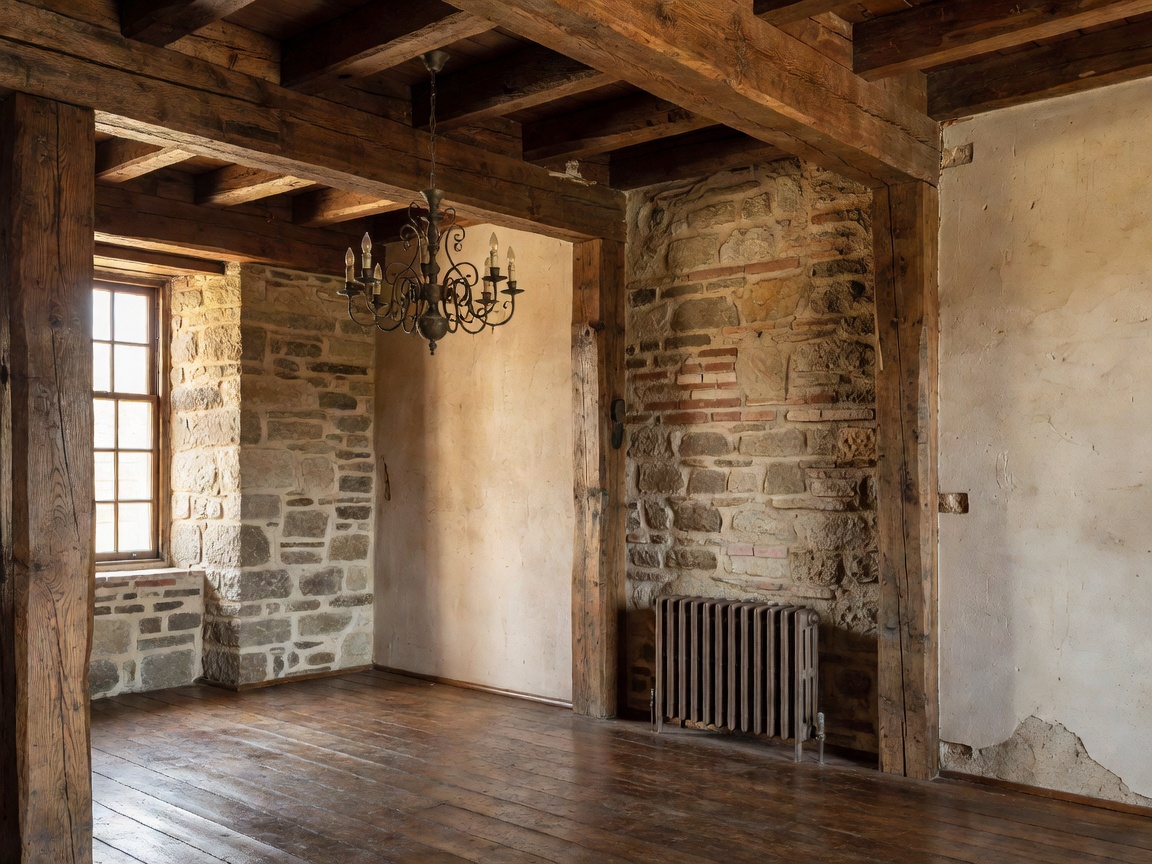
Material choices shape how a room sounds, cleans, ages, and feels. The strongest interiors usually balance existing surfaces with a limited number of contemporary additions. The objective is not to imitate an earlier period. It is to make relationships clear.
Timber and stone
Timber floors add warmth, line, and visual continuity. Their condition, movement, finish, and exposure to water affect the right use. Stone brings weight and durability, but can feel visually cold or amplify sound. Use mats, furniture pads, and sensible cleaning routines without promising that any material is maintenance-free.
Plaster, tile, and metal
Plaster can soften light and reveal irregularity. It may be vulnerable to impact, salts, and moisture. Tile is practical in wet or high-use areas, yet grout and junctions require care. Metal provides a precise edge and can connect contemporary fittings to old hardware. Oxidation, coatings, and touch points should be considered before selection.
Glass and perceived room size
Glass can preserve sightlines and increase visual continuity. It does not remove sound, glare, reflections, or cleaning demands. Dark glass can add depth but may reduce perceived brightness. A reflective surface should support circulation and light, not create confusion near stairs or doors.
Cabinetry and furniture
Freestanding furniture leaves more of the room legible and can be moved as needs change. Built-in cabinetry uses awkward corners and increases storage, but it makes future alteration harder. Keep clearances around windows, radiators, shutters, doors, and service access. Heavy pieces need appropriate floor assessment.
Lighting and textiles
Use layers: general light, task light, and controlled emphasis. Concealed light can disappear visually, while visible fittings can establish a contemporary note. Textiles reduce reverberation, soften glare, and add comfort. They also collect dust and can affect ventilation around walls and radiators.
Historic and contemporary comparisons
- Historic material: carries evidence and repair potential; may be uneven or sensitive.
- Contemporary alternative: can offer predictable performance; may lack patina or create a false period effect.
- Light palette: increases visual space; can show dirt and wear.
- Dark palette: adds depth; needs deliberate lighting and contrast.
Short checklist
- List existing materials before adding new ones.
- Check moisture exposure and cleaning needs.
- Test samples in morning, afternoon, and evening light.
- Keep service access and door swings clear.
- Balance hard finishes with acoustic absorption.
Good for
Interior briefs, furniture layouts, finish schedules, and decisions about where new work should remain distinct.
What to know
Material performance varies by assembly, installation, exposure, and care. Product claims and specifications must be checked with suppliers and professionals.