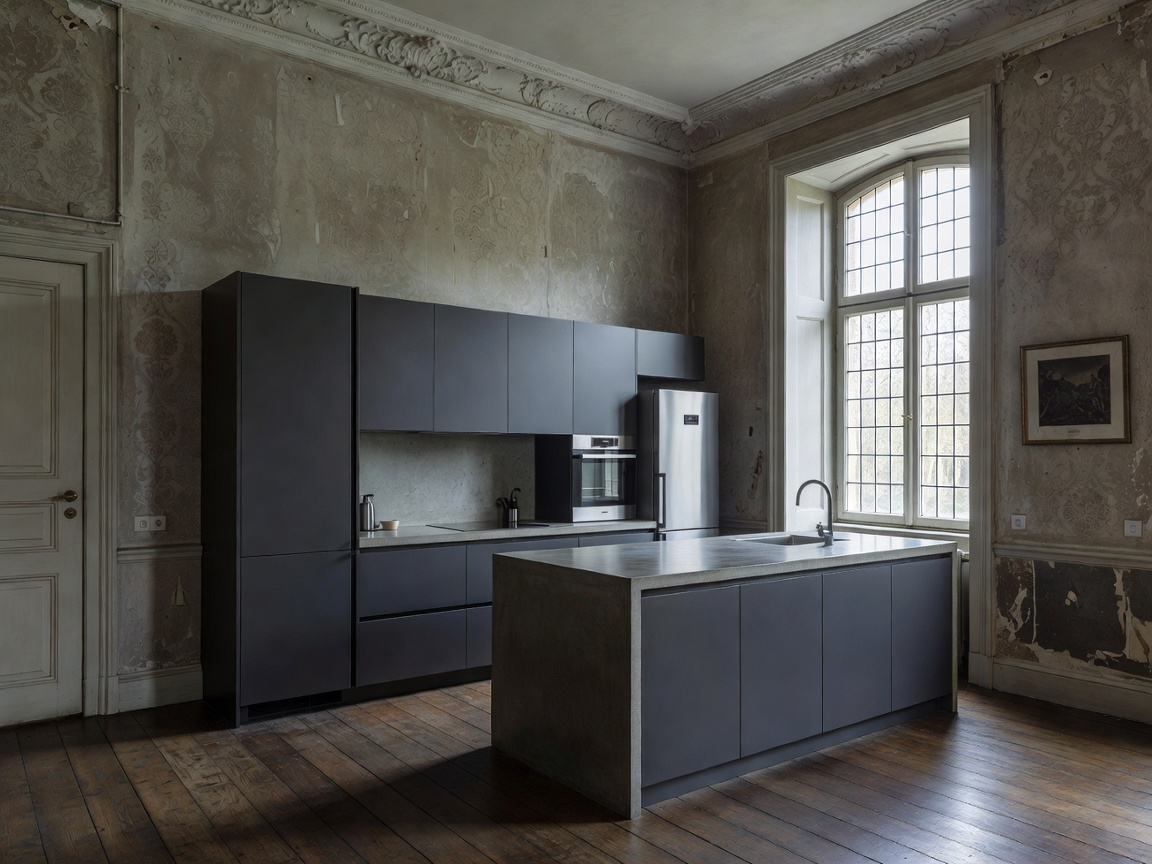
Renovation is not one action. It can mean repair, service replacement, energy work, spatial change, or surface renewal. Start with records, drawings, condition observations, and professional advice. General guidance cannot determine safe methods for a particular building.
Preserve, repair, upgrade, introduce
Preserve means retaining significant fabric and its position. Repair means addressing failure with the least disruptive suitable work. Upgrade means improving an existing service. Introduce means adding a new system or function where none existed. Keeping these categories separate makes decisions clearer.
Heating and insulation
Heating comfort depends on fabric, air movement, room volume, controls, exposure, and household routines. Historic walls may be substantial but still damp or thermally uneven. Insulation can help, but location, vapour movement, junctions, and moisture risk require qualified assessment. Do not seal a problem that has not been understood.
Ventilation and moisture
Ventilation removes moisture, odours, and pollutants. New kitchens, bathrooms, tighter windows, and insulation can change the balance. Extract systems need suitable routes and maintenance. Condensation on cold surfaces, persistent smells, mould growth, peeling finishes, or salt deposits are reasons to seek competent advice, not reasons to cover the symptom.
Electrical and plumbing systems
Historic routes may be concealed, altered, or difficult to access. Modern electrical demand, water pressure, drainage falls, and appliance positions must be coordinated before finishes are closed. Use licensed or otherwise appropriately qualified professionals for electrical, gas, structural, and plumbing work. Never treat a general article as a method statement.
Kitchens, bathrooms, and acoustics
Kitchens need extraction, water, drainage, heat-resistant surfaces, and clear working routes. Bathrooms need ventilation, moisture control, access, and careful junctions. Both can place new services near fragile fabric. Acoustic control includes doors, floor build-up, soft furnishings, equipment location, and shared-wall conditions. One intervention rarely solves every sound issue.
Lighting and integration
Use existing proportions to position fittings. Surface-mounted routes may be more legible and reversible than deep chasing, but the visual choice depends on the room. Layer ambient, task, and accent light. Keep access panels and shut-off points serviceable. A neat finish that blocks maintenance is not a successful finish.
Advantages and limitations
- Repair-first: retains fabric and reduces disruption; may leave some performance limits.
- Full replacement: can simplify services; creates more waste and interface risk.
- Higher airtightness: may improve comfort; requires deliberate ventilation.
- Integrated technology: improves control; adds equipment, routes, and maintenance.
Short checklist
- Record existing services before opening surfaces.
- Identify moisture symptoms and their possible causes.
- Coordinate heating, ventilation, lighting, and furniture.
- Protect floors, doors, cornices, and stair routes during work.
- Use qualified professionals for regulated or hazardous work.
Good for
Briefing designers, comparing intervention levels, and creating a sensible order of decisions.
What to know
Building performance is site-specific. Local permissions, lease rules, fire requirements, conservation controls, and professional calculations may apply.